
Construction Safety Tech 2026
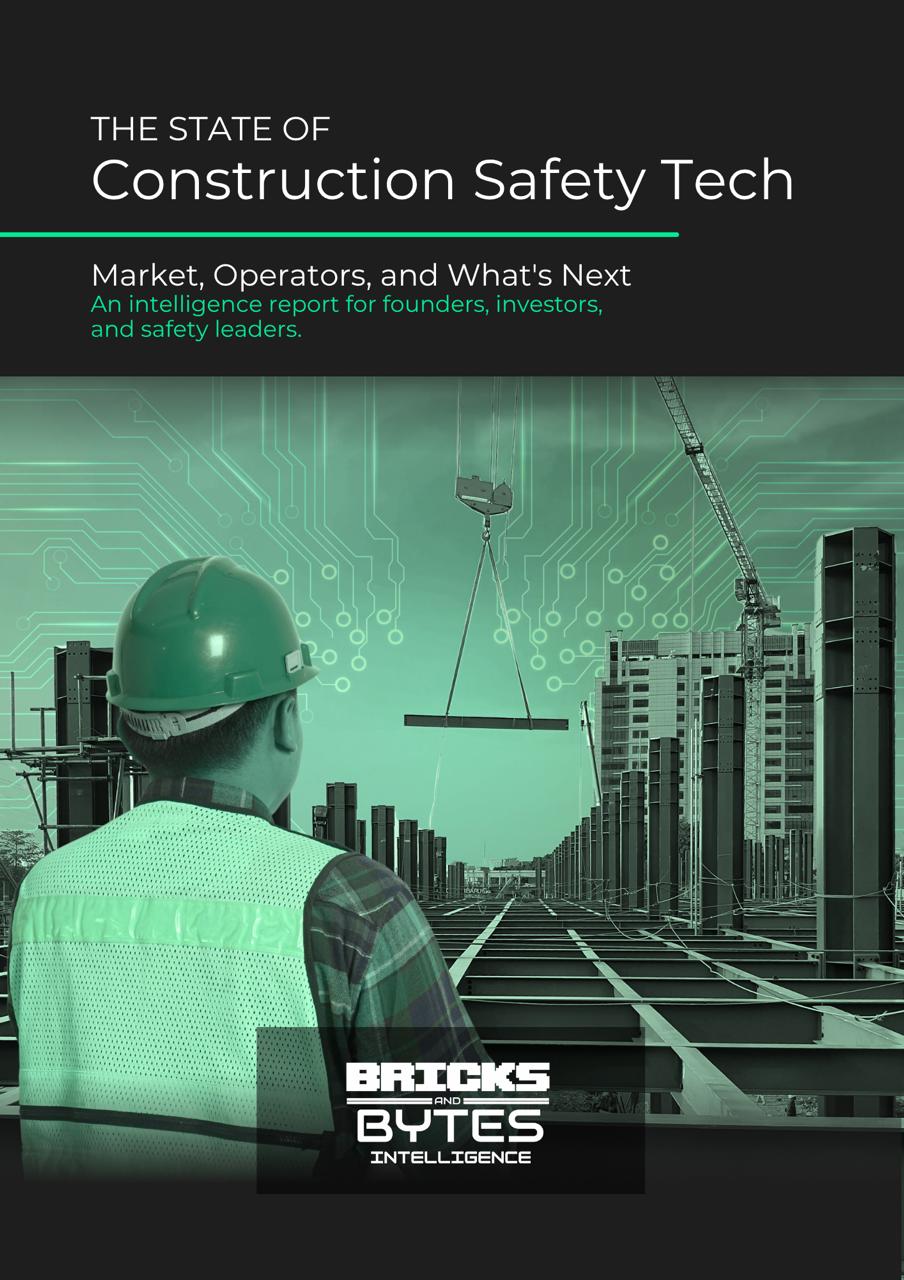
Construction is still the most dangerous place to work in the developed world, and the software running its safety function is usually the worst software on the site. In 2026 that finally starts to change. Four forces are converging at once: AI that actually works on the jobsite, a coalition of new enterprise buyers, regulatory expansion across APAC and the Gulf, and insurance convergence. This report maps the category, names the operators, and gives you the framework to underwrite the next decade, built from primary conversations with eight founders, product leaders, and global safety executives.
Get the ReportBuilt for founders, investors, safety leaders, enterprise contractors, hyperscale owners, risk teams, and strategic buyers.
What’s Inside
From the Substrate Layer to Portfolio Alpha
Nine sections covering the full picture, a working definition of safety tech, the four forces driving the 2026 inflection, market sizing, the category map, the coalition that actually decides enterprise deals, the pricing models that work, three operator case studies, and an investment framework you can apply tomorrow.
8 operators
Founders, product leaders, and global safety executives interviewed for the primary intelligence.
4 continents
Coverage across ANZ, North America, UK and Ireland, and the Gulf, the markets defining the category.
7 buckets
A complete category map of construction safety tech, from EHS platforms to wearables.
Why Safety Tech, Why Now
The four forces converging in 2026: AI on the jobsite, the coalition buyer, regulatory expansion from Singapore to Sydney, and insurance convergence backed by real actuarial data.
A Working Definition of Safety Tech
Cam Stevens' three layer model, design of work, experience of work, and safety of work itself, and why most platforms market into one layer and deliver in another.
Market Landscape, Sizing the Opportunity
The honest TAM read: a $3B to $5B global software market today on trajectory to $10B to $15B by 2030, plus the three waves of capital from 2018 onward.
The Category Map, Seven Buckets
EHS platforms, construction native platforms, horizontal construction software, AI native safety platforms, computer vision, wearables and PPE, and training and competency.
Understanding the Buyer
Eight stakeholders sit around an enterprise safety tech purchase; at least three hold veto power and the workforce itself casts the deciding vote. Plus the emerging fourth buyer: hyperscalers.
Pricing, Packaging, and ROI
Why per seat SaaS consistently underperforms in construction, and which models land, per project, per site flat fees, and the new insurance linked model.
How Safety Tech Actually Gets Evaluated
The five factors that decide enterprise deals: field adoption, stack fit, data quality, five year viability, and the shiny ball filter.
Operator Case Studies, Three Lenses on the Moat
HammerTech on data as the moat. Nexus Safety on intelligence versus compliance. innDex on hardware as the moat, because an AI agent cannot install a turnstile.
The Investment Framework, The Data Flywheel
Why category leaders compound differently. Three scenarios for 2030, and five things that will most influence outcomes through the decade.
“Construction safety tech is not a product upgrade. It is the rewiring of safety itself, from the paperwork that records incidents into the systems that prevent them.”
From the report
Who This Is For
Built for the People Underwriting, Building, and Deploying Construction Safety Tech
Whether you are running a construction safety company, allocating capital across the category, or buying these systems into a real industrial operation, this report gives you the data and frameworks to act in 2026.
Download the Report
Get Construction Safety Tech 2026
Fill in your details and the report will be sent through the Bricks & Bytes form bridge. The download link will also appear after submission.




